
Is Mexico City Safe for Tourists in 2026? What I Learned After 20+ Trips
Last Updated: April 27, 2026
Before my first trip to Mexico City, I did what most people do. I Googled it. I read scary headlines, watched dramatic news segments, and almost talked myself out of going.
Then I went anyway, and I have been going back ever since. That was more than 20 years ago.
I have now visited Mexico City more times than I can count, and I have walked Roma Norte solo at night, taken the Metro during rush hour, eaten tacos from street vendors in the rain, and never once felt unsafe.
That does not mean Mexico City is without risk because nowhere is completely safe.
It means you are probably scared for no reason, and the crime is nothing like what the American media would have you believe.
What I can tell you right now, in 2026, is this: Mexico City has a Level 2 travel advisory from the U.S. State Department, the same level as Paris, Rome, and London.
It is not Level 4. Level 4 is for states like Sinaloa and Guerrero. Mexico City is a different situation entirely, and if you are making travel decisions based on a headline that fails to make that distinction, you are making decisions with incomplete information.
The FIFA World Cup is coming to Mexico City in 2026, with Mexico playing its group matches at the Azteca.
The links in this post may be affiliate links. That means that if you click them and make a purchase, this site makes a commission. It will have no impact on the price you pay or the experience of your purchase.
Millions of fans are already planning trips.
That means more safety information is circulating, some of it accurate, some of it not.
This guide is based on what I have personally seen and done, updated with the most current advisories and data.
Ready to explore CDMX? Let’s get into it.
U.S. State Department Unveils New Mexico City Travel Advisory
Mexico is not one advisory. It is 32 separate advisories for 32 separate states, and lumping them all together is exactly how fear gets manufactured.
Mexico City sits at a Level 2 advisory as of April 2026, which means exercise increased caution.
That is the same rating as France, the United Kingdom, and the Bahamas. Level 4 means do not travel, and it applies to states like Sinaloa, Tamaulipas, and Guerrero, not to the capital where you are planning your trip.
Here is what the four levels actually mean:
- Level 1 — Exercise normal precautions. Canada, Japan, Iceland.
- Level 2 — Exercise increased caution. Mexico City, Paris, Rome, London.
- Level 3 — Reconsider travel. States like Jalisco and Baja California.
- Level 4 — Do not travel. Six specific Mexican states with concentrated cartel violence.
Mexico City is Level 2. That is where this conversation starts and ends.
For a full breakdown of how the advisory system applies across the entire country, read my Mexico travel warning and safety guide before you compare Mexico City to other destinations.”
According to Berkshire Hathaway Travel Protection’s 2026 research, the crimes most likely to affect tourists in CDMX are non-violent: pickpocketing, petty theft, and phone snatching.
Kidnapping and drug-related incidents rarely involve American tourists who stay in established visitor neighborhoods.
The violence that does make headlines is overwhelmingly cartel-on-cartel, not directed at tourists.
I have watched people get online and bash Mexico City because a headline said “Mexico travel advisory” without ever reading which part of Mexico the advisory covered.
Read the advisory. Then read it correctly.
Jalisco holds a Level 3 advisory because of rural cartel activity, though Puerto Vallarta itself remains a popular tourist destination. If PV is on your list, read my full guide on whether Puerto Vallarta is safe before you book.
🗺️ Is Mexico City Safe? Quick Answers
Everything you need to know before you scroll — based on 20+ years of firsthand experience in CDMX.
| Is Mexico City safe for tourists in 2026? | ✅ Yes — stay in Roma Norte, Condesa, or Polanco and use Uber after dark |
| U.S. State Department advisory | ⚠️ Level 2 — Exercise Increased Caution. Same rating as France, UK, and the Bahamas. Not Level 4. |
| Safest neighborhoods for tourists | 🟢 Roma Norte, Condesa, Polanco, Coyoacán, San Ángel |
| Areas to avoid | 🔴 Tepito, outer Iztapalapa, Doctores after dark, Centro Histórico late at night |
| Safest airport transfer | ✅ Official prepaid taxi kiosk inside the terminal or Uber from the designated app pickup zone. Never accept rides from strangers in arrivals. |
| Is the Metro safe? | ✅ Yes during the day — use women-only cars (pink signage, front of train). Watch for pickpockets during rush hour. |
| Main tourist risks | ⚠️ Pickpocketing, phone snatching, unlicensed taxis, police extortion (la mordida), ATM scams |
| Is Mexico City safe for solo female travelers? | ✅ Yes — I travel here solo regularly as a Black woman in my 50s. Right neighborhood + Uber after dark makes the difference. |
| Is Mexico City safe for Black women travelers? | ✅ Yes — CDMX is one of the most cosmopolitan cities in Latin America. In Roma Norte, Polanco, and Condesa you are welcomed as any other international visitor. |
| Is Mexico City safe for Americans? | ✅ Yes — millions of Americans visit CDMX annually without incident. Use the same awareness you would in any major U.S. city. |
| Is Mexico City safe at night? | ⚠️ In tourist neighborhoods yes — Roma Norte and Polanco stay active late. Use Uber rather than walking long distances after dark. |
| Is Mexico City safe for the FIFA World Cup 2026? | ✅ Yes — security around Estadio Azteca and tourist corridors is elevated for the tournament. Plan airport transfers well ahead on match days. |
| Can you drink the tap water? | ❌ No — drink bottled water. Restaurant ice in tourist areas is made from purified water and is safe. |
Advisory status current as of April 2026. Always check travel.state.gov for the latest updates before you travel.
Mexico City Safety in 2026: What the Data Actually Shows
Let me put real numbers behind this conversation because data is harder to argue with than headlines.
Mexico City’s homicide rate sits at roughly 7.9 per 100,000 people, down steadily from a 2018 peak.
Baltimore, New Orleans, and Memphis have all posted higher rates in recent years. Nobody is canceling trips to Bourbon Street.
For 2026, Berkshire Hathaway Travel Protection ranks Mexico City 34th out of the 39 most popular destinations for American travelers globally.
The crimes most likely to affect tourists are non-violent: pickpocketing, petty theft, and phone snatching. Kidnappings and drug-related incidents rarely involve American tourists who stay in established visitor neighborhoods.
Crime rates in Roma Norte, Condesa, and Polanco are significantly lower than the citywide statistics suggest.
The crimes that do occur in tourist neighborhoods are overwhelmingly non-violent property crimes.
As I said earlier, I’ve been traveling to CDMX for years, and what matters most is where you stay and how you move around.
Those overall statistics include outer colonias and industrial zones that tourists have no reason to visit.

Which Mexico City Neighborhoods Are the Safest?
This is the most important decision you will make for your entire trip. Not your flight, not your itinerary.
Where you book your hotel determines your entire safety experience in CDMX.
After more than 20 years of traveling here, these are the neighborhoods I recommend without hesitation.
Roma Norte is where I stay.
It offers the best combination of safety, walkability, and authentic cultural immersion in the city.
The main avenues like Álvaro Obregón, Colima, and Orizaba are well-lit and populated with diners and pedestrians well into the late evening.
The food scene here is next level, the boutique hotels are excellent, and you can walk to almost everything you want to do.
If you are weighing Mexico City against the beach, I have a full guide on whether Cancun is safe for travelers that covers the same level of detail.”
For solo female travelers specifically, this is my top recommendation.
Condesa sits right next to Roma Norte and shares the same safety profile.
Known for its two massive green spaces, Parque México and Parque España, Condesa is heavily populated by dog walkers, joggers, and international expats.
The constant foot traffic, well-lit parks, and outdoor dining make it one of the most comfortable neighborhoods in the city for tourists.
If Roma Norte feels too busy, Condesa gives you a quieter version of the same safety level.
Polanco is the most secure neighborhood in the city.
Home to international embassies, luxury shopping, and high-end dining, Polanco features private security on almost every block because of the concentration of diplomatic residences.
The Four Seasons and St. Regis are both here.
It is more corporate than Roma Norte but the safety infrastructure is unmatched. This is where I point first-time visitors who want maximum peace of mind.
Paseo de la Reforma corridor connects Polanco to Condesa and is anchored by the iconic Angel of Independence monument.
Major luxury chain hotels line this boulevard and it is heavily patrolled. It works well as a base if you want a central location with easy access to everything.
Coyoacán is farther south and worth a day trip to see the Frida Kahlo Museum and the colonial plazas, but it is too far from the main tourist core to serve as a home base for a short trip.
For a first trip, Roma Norte or Condesa are the easiest bases.
If your trip is focused on luxury hotels, fine dining, and museums, Polanco is the right call. Both are safe. They just suit different travel styles.
The rule I give everyone: if you are asking whether a hotel is too far out because the price looks good, it probably is.
Pay for the location in Mexico City is worth every single peso.
Planning to add Los Cabos to your itinerary? My Cabo safety guide breaks down exactly what you need to know before you go.”
Areas to avoid in Mexico City
Now that we have discussed the safest areas in Mexico City for tourists, here is a list of areas you should avoid when traveling to Mexico City or at a minimum, be mindful of your surroundings:
- Tepito—Tepito, essentially the black market of Mexico City, has a dicey reputation for a reason. Situated just off the Centro Histórico, it’s most well-known for its vast tianguis (street markets). But if you’re looking for a bargain, go somewhere else—most goods in Tepito are low-quality Chinese products or stolen.
- Ciudad Neza – Ciudad Nezahualcóyotl (more commonly referred to as Ciudad Neza), a vast urban sprawl that’s technically within the Mexico City metropolitan zone, is another area that isn’t worth visiting if you value your safety.
- Tlalpan, Xochimilco, and Tlatelolco – I’ve included these three under one entry as after dark, they all become pretty dangerous and should be avoided.
Colonia Del Valle – Colonia del Valle is the zone that has the highest rate of kidnappings in Mexico City, but the kidnappings are more of a danger for locals than tourists.
🏘️ Mexico City Neighborhood Safety Guide
Where to stay, where to visit with caution, and where to skip entirely — based on 20+ years of traveling CDMX.
| Neighborhood | Safety Level | Best For |
|---|---|---|
| ✅ Safe — Recommended for Tourists | ||
| Roma Norte | 🟢 Very Safe | First timers, solo travelers, foodies, boutique hotel stays |
| Condesa | 🟢 Very Safe | Couples, relaxed stays, parks, expat neighborhood vibe |
| Polanco | 🟢 Very Safe | Luxury hotels, families, easiest first stay, Four Seasons and St. Regis |
| Coyoacán | 🟢 Safe | Day trips, Frida Kahlo Museum, cultural visits, colonial charm |
| San Ángel | 🟢 Safe | Quiet stays, local vibe, cobblestone streets, Saturday artisan market |
| ⚠️ Use Caution — Visit With Awareness | ||
| Juárez / Zona Rosa | 🟡 Caution | Nightlife, LGBTQ+ scene — extra awareness after dark, stick to busy streets |
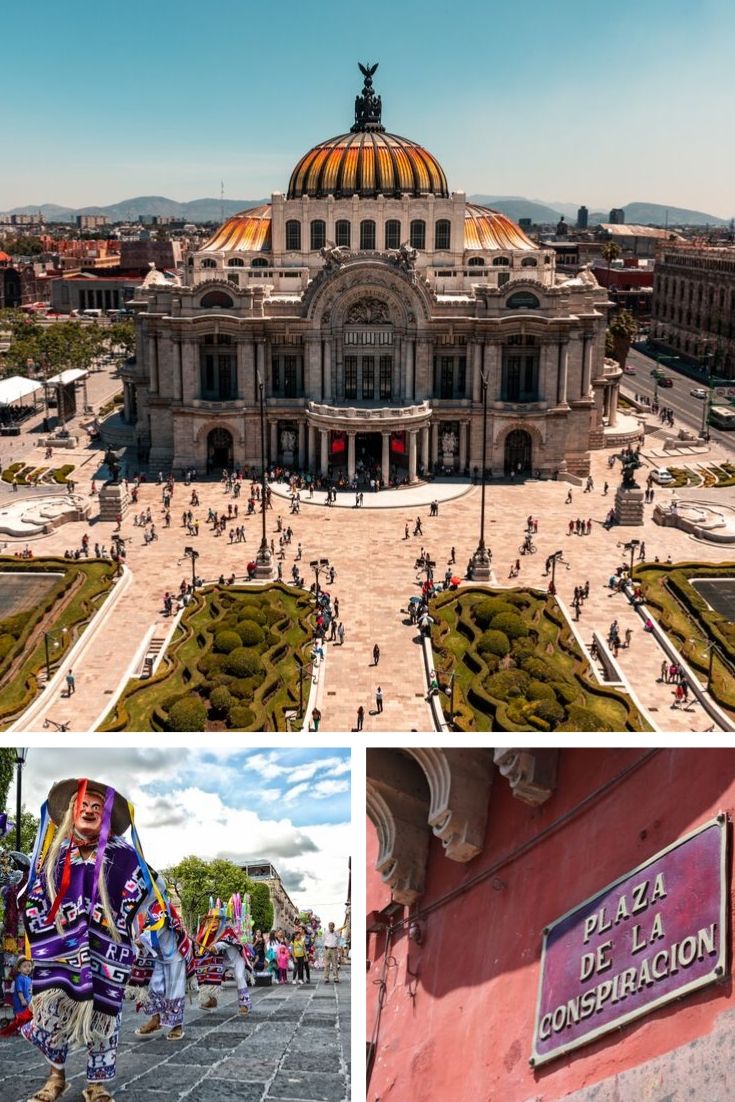
| Centro Histórico | 🟡 Caution | Daytime sightseeing only — Zócalo, Palacio de Bellas Artes. Avoid wandering late at night. |
| 🚫 Avoid — No Tourist Reason to Visit | ||
| Tepito | 🔴 Avoid | Skip entirely — high-crime reputation, black market activity, not a tourist area |
| Outer Iztapalapa | 🔴 Avoid | No tourist attractions here — too far from the center and not worth the exposure |
| Doctores | 🔴 After Dark | Lucha Libre at Arena Mexico is worth visiting — but head straight back to Roma Norte when the event ends |
My rule of thumb: If you are asking whether a hotel is too far out because the price looks good, it probably is. Pay for location in Mexico City. It is worth every peso.
Kidnapping and Express Kidnapping in Mexico City: What You Should Know
Traditional kidnapping in Mexico targets wealthy Mexican nationals and business figures, not tourists.
Kidnappings and drug-related incidents in Mexico City rarely involve American tourists who stay in established visitor neighborhoods.
I have never known or even heard about a tourist staying in Roma Norte, Condesa, or Polanco being kidnapped.
The reality that most tourists never hear about is express kidnapping, called paseo millonario locally. It is not a Hollywood kidnapping.
It is a wrong taxi, a locked door, and someone emptying your bank account at every ATM between your hotel and the airport.
It almost always involves one of three mistakes:
- Taking an unlicensed street taxi,
- Accepting a ride from a stranger, or
- Wandering in a neighborhood where you have no business being alone after dark.
Never get into an unmarked taxi.
Use Uber or DiDi instead of walking long distances after dark.
Keep your phone inside your bag while walking. Do not flash cash or expensive items.
Violent crime, including kidnapping, is concentrated in low-income outer colonias and specific hotspots that tourists have no reason to visit.
Very rarely, Mexico City sometimes experiences kidnappings. While it is very rare you should know what to do and who to call.
- Kidnappings in Mexico City occur based on perceived vulnerability, but foreigners are rarely targeted.
- In a popular scam, some visitors receive calls or emails saying their travel companion has been kidnapped. Just hang up and report the call to the local police.
- Do not provide personal information (i.e., phone number, hotel location, email address) to anyone outside your party, shopkeepers, or public surveys.
- Express kidnappings are a form of mugging when a taxi driver temporarily abducts their passenger and forces them to withdraw all their money from an ATM.
- These unfortunate incidents can easily be avoided by ordering an Uber, which is very affordable in Mexico City.
I know for a fact Mexico City takes safety seriously, the city has an incredibly high police-to-civilian ratio and over 11,000 security cameras around the city itself so yeah, you are safe in Mexico City.
Getting Around Mexico City Safely: Metro, Uber, and DiDi
The Metro is one of the best ways to move around CDMX. It is cheap, fast, and covers most of the city. The flat fare is 6 pesos regardless of distance, which is less than 50 cents.
During rush hour, it gets extremely crowded, and that is when pickpocketers come out!
Keep your phone in your front pocket or inside your bag, not in your hand.
One detail that matters specifically for women: the Metro has women-only and children-only cars, marked with pink signage on the platform, usually at the front of the train.
Use them.
They are enforced and they exist for a reason, especially during morning and evening rush hour when the general cars get packed tight enough that you lose control of your personal space entirely.
For getting around outside the Metro, Uber and DiDi are both safe, fully tracked, and widely used by locals and tourists throughout the city.
You can see your driver’s information before you get in, share your trip details with someone at home, and pay through the app so no cash changes hands.
I use one of them every single time I am out after dark, without exception.
Never flag a taxi from the street. Unlicensed street taxis are the single most common vehicle for express kidnapping incidents in CDMX.
It does not matter how official the car looks or how short the distance is. Uber or DiDi costs the same or less and removes the risk entirely.
If you are at a restaurant or hotel and need a taxi, ask the staff to call one from a registered company rather than walking outside to flag one down.
Is Mexico City Safe for Solo Female Travelers?
I have traveled to Mexico City solo more times than I have traveled there with anyone else. I am a Black woman in my 50s and I take safety seriously, and it is still one of my favorite cities to visit alone.
The Metro has women-only cars marked with pink signage at the front of the train, operating during rush hour to eliminate crowding and reduce harassment.
Use them every single time.
Catcalling happens, especially outside Roma Norte, Condesa, and Polanco. My response after 20 years is to ignore it and keep moving.
Here is exactly what I do every trip without exception:
- Share your live location with someone you trust at home before you leave your hotel
- Use Uber or DiDi after dark instead of walking streets you do not know
- Keep your phone inside your bag while walking, not visible in your hand
- Never get into an unlicensed street taxi under any circumstances
- Use the women-only Metro car during morning and evening rush hour
- Do not leave your drink unattended in bars or restaurants
- Stay in Roma Norte, Condesa, or Polanco where foot traffic stays active late into the night
- Book hotels rather than short-term rentals for your first trip so you have 24-hour staff available
Before you go, grab my Travel Safety Guide for $19.99. It covers exactly how I stay safe traveling solo across 65-plus countries, including cities like Mexico City.
Earthquakes and Natural Disasters in Mexico City
Mexico City sits in a seismic zone and earthquakes are part of life here.
The 1985 earthquake reshaped the city entirely and the 2017 quake caused significant damage across multiple neighborhoods.
Buildings constructed after 1985 follow strict seismic codes, so modern hotels in Roma Norte, Condesa, and Polanco are built to a higher standard than older structures.
If you feel a tremor, move away from windows and heavy furniture, get under a sturdy table, and do not use elevators.
The city’s early warning system, the Sistema de Alerta Sísmica, broadcasts an alarm several seconds before shaking begins.
Mexico City runs earthquake drills every September 19th in memory of the 1985 disaster. If you are there that day and hear sirens during the drill, that is what it is.
Popocatépetl volcano sits roughly 45 miles southeast of the city and has been active in recent years. It does not pose a direct threat to CDMX but occasionally causes flight delays at the airport due to ash.
Check CENAPRED for current volcanic activity before you travel.
Food, Water, and Health Safety in Mexico City
Carbon monoxide is not the safety concern most people Google before a Mexico City trip.
It should be. U.S. citizens have died from carbon monoxide poisoning in Mexico because many hotels and vacation rental properties do not have detectors installed.
Before you book, ask your hotel whether carbon monoxide detectors are installed in the rooms. If they cannot confirm it, pack a portable detector.
They are small, inexpensive, and worth every penny. This applies especially if you are staying in a short-term rental or an older building.
Mexico City also sits at 7,350 feet above sea level. If you are flying in from a low-altitude city, give yourself your first day to adjust.
Headaches, fatigue, and light dizziness are common and they pass faster if you hydrate consistently and hold off on heavy alcohol until your body has had time to acclimate.
Do not drink straight from the tap in Mexico City. The city’s water treatment system is sophisticated but the distribution pipes are old and in some areas damaged by the sinking ground.
The good news on ice: commercial ice used in restaurants and bars throughout tourist areas is made from purified water.
Street food is one of the greatest reasons to visit Mexico City, and I eat it every single trip.
High turnover means fresh ingredients.
A busy taco stand at lunchtime with locals lined up is a better safety signal than an empty restaurant with a laminated English menu.
I look for food that is cooked to order in front of me, vendors who handle money separately from food, and stalls where the protein is kept hot.
If you do get sick, pharmacies throughout the tourist neighborhoods have licensed doctors on-site.
Look for the “Médico General” sign outside. Treatment is fast, affordable, and requires no appointment.
Keep your Travelex Insurance information accessible so you have coverage documentation if you need anything beyond a basic pharmacy visit.
What if you Are Robbed or mugged?
If you are mugged, pickpocketed, or express kidnapped, please do not panic. Keep calm, which I know is easier said than done.
Whatever you do, do not fight back; just give them your cash or phone, then call the police. Once you have contacted the police, then you can cancel your credit cards and call your insurance company.
If they took your passport, contact the embassy; they should be able to assist you in getting back home.
I would like to tell you Mexico City is 100% safe, but unfortunately, there will be crime no matter the destination.
Whenever I hear anyone say a particular destination is completely safe, I’m a little skeptical because anyone who gives a blanket statement like that is lying because there is crime everywhere.
With that being said, my answer is yes, “Mexico City is safe” if you take reasonable precautions to keep yourself safe, like leaving expensive jewelry at home, not flashing money around, and leaving those expensive electronics in your hotel room.

How to Deal with Police Extortion in Mexico City
Police corruption exists in Mexico City and knowing what it looks like before it happens is your best protection.
The scenario is almost always the same. An officer approaches you near a tourist area and tells you that you violated some law.
The violation is vague. Maybe you jaywalked, maybe you were drinking a beer on the street.
The officer then suggests paying a fine right now, in cash, directly to them. That cash goes straight into their pocket. This is called la mordida, the bite.
The amounts typically run 200 to 500 pesos, roughly ten to twenty-five dollars. Low enough that most tourists pay it just to make the situation disappear.
That calculation is exactly what corrupt officers count on.
Here is what works. Stay completely calm. Do not raise your voice and do not reach for your wallet. Tell the officer politely that you want an official ticket and will pay the fine at the station.
Corrupt officers hate paperwork. Insisting on an official ticket rather than a cash payment on the spot typically resolves the situation within minutes.
The bluff works because processing a tourist through official channels creates documentation and accountability that a corrupt officer does not want.
Download the Mi Policía app before you arrive.
It documents and reports police corruption in CDMX and mentioning it during an encounter is a deterrent on its own.
How Not to Handle It
Three things make it worse. Getting angry removes your best asset, appearing calm and unbothered. Immediately reaching for your wallet signals you are willing to pay and sets the negotiation in motion.
And handing over your actual passport is not required.
Carry a photocopy when you are out and keep the original secured at your hotel.
This scenario is far less common in Roma Norte, Condesa, and Polanco than near heavily trafficked sites like the Zócalo.
Staying in the right neighborhoods and skipping a rental car in the city eliminates most of the exposure.
Common Tourist Scams in Mexico City and How to Handle Them
None of these is a reason to avoid Mexico City. There are reasons to spend sixty seconds reading this before you go.
Police extortion gets most of the attention in travel guides. The scams below are actually far more common and far more likely to affect you on a regular day in CDMX.
Fake police officers asking to inspect your wallet or money. A person approaches you in plain clothes or a partial uniform and claims to be an officer investigating counterfeit currency.
They ask to see your cash. No legitimate police officer inspects tourist wallets on the street. Walk away or ask to be taken to an official station. The request disappears immediately.
ATM helpers. Someone stands near an ATM and offers to assist you, claiming the machine is difficult or that your card needs help.
They are skimming your information or watching your PIN. Use ATMs inside bank branches only, preferably during business hours when staff are present.
Cover the keypad every single time you enter your PIN regardless of who is around.
Taxi meters that run fast or are mysteriously broken. The driver tells you the meter is not working and quotes you a flat rate that doubles by the time you arrive.
This is exactly why Uber and DiDi exist. The price is locked before you get in.
Bar bills that do not match what you ordered. This happens most in cantinas and bars near the Zócalo and in heavily touristy areas.
You order two drinks and the bill shows four. Always ask for an itemized receipt, check it before you pay, and question anything that does not match. Paying by card creates a paper trail that discourages this entirely.
Distraction techniques in crowded areas. Someone spills something on you, bumps into you hard, or causes a scene nearby.
While your attention shifts, an accomplice takes your phone or reaches into your bag. Keep your bag in front of you in crowds.
If someone creates unexpected physical contact, your first instinct should be to check your belongings, not to help them.
Counterfeit currency at informal markets. Change given at street stalls and informal markets can include fake 50 or 100 peso notes.
Learn what real Mexican peso notes look and feel like before you arrive. Pay with smaller bills when you can and check your change before you walk away.
Safety Tips for Traveling to Mexico City
No matter the destination, it is a good idea to follow these basic travel safety tips. Follow these tips while traveling to Mexico City:
- Steer clear of spots with a bad reputation, known gang activity, or places that give you bad vibes. Stick to well-traveled places.
- Check-in with friends and family back home as often as you can. Make sure someone knows where you’re at and when you expect to check in next.
- Be aware of your surroundings. This is a good rule of thumb in general, but it’s especially important when traveling alone.
- Don’t drink too much. Make sure you know your limits. Don’t put yourself in a vulnerable position.
- Only use ATM machines that are found at reputable local banks or those at your resort.
- Do not wear expensive jewelry or watches that might attract unwanted attention.
- Avoid taking excessive amounts of cash out and about with you.
- Use the Orbitz Visa credit card because it does not charge international fees so you will not have to walk around with cash.
Stick with your friends rather than splitting up, especially when out late at night. If you plan to drive, make it a point to travel during daylight hours.
Taking a taxi at night is always a great idea, just to be safe and know which areas to avoid in Mexico City.
U.S. Embassy Mexico City
- 📍 Presa Angostura 225, Col. Irrigación, Alcaldía Miguel Hidalgo, Ciudad de México, C.P. 11500
- 🕐 Monday through Friday, 8:30 a.m. to 5:00 p.m. Closed on U.S. and Mexican holidays.
- American Citizen Services (business hours) From Mexico: 55-8526-2561 From the United States: 844-528-6611
- Emergencies outside business hours +52 55 5080-2000
- 24-Hour Emergency Line (State Department) From abroad: +1-202-501-4444 From the U.S. and Canada: +1-888-407-4747
- Email Mexico.ACS@gdit-gss.com
- Official Website mx.usembassy.gov
One thing I recommend doing before every international trip: Enroll in the Smart Traveler Enrollment Program (STEP) at step.state.gov.
It is free, takes five minutes, and means the embassy can contact you directly in an emergency, including natural disasters, civil unrest, or a family emergency back home.
I enroll before every trip abroad without exception.
PLEASE FOLLOW THE RULES BELOW:
- Use toll roads when possible and avoid driving alone or at night. In many states, police presence and emergency services are extremely limited outside the state capital or major cities.
- Exercise increased caution when visiting local bars, nightclubs, and casinos.
- Do not display signs of wealth, such as wearing expensive watches or jewelry.
- Be extra vigilant when visiting banks or ATMs.
- Enroll in the Smart Traveler Enrollment Program (STEP) to receive Alerts and make it easier to locate you in an emergency.
- Follow the Department of State on Facebook and Twitter.
- Review the Crime and Safety Reports for Mexico.
U.S. citizens who travel abroad should always have a contingency plan for emergency situations. Review the Traveler’s Checklist.
Mexico City Travel Insurance
I can’t say this enough, but please get insurance when traveling to Mexico! Even if you only go on a short trip, you should always travel with insurance.
Have fun while visiting Mexico, but take it from someone who has racked up thousands of bucks on an insurance claim before; you need it.
Make sure to get your insurance before you head off on an adventure! I highly recommend Travelex Insurance.
Frequently Asked Questions About Mexico City Safety
Yes, with the same common sense you would use in any major city. Mexico City holds a Level 2 travel advisory from the U.S. State Department, the same designation as many European capitals. The tourist neighborhoods of Roma Norte, Condesa, and Polanco are considered safe for day and evening activity.
Mexico City, known as CDMX, carries a Level 2 advisory, which means exercise increased caution. It does not mean do not travel. Level 4 advisories apply to specific Mexican states such as Sinaloa, Guerrero, and Tamaulipas, not to Mexico City.
It can be, and I travel there solo regularly. Stick to Roma Norte, Condesa, and Polanco. Use the women-only Metro cars. Use Uber or DiDi instead of street taxis. Share your location with someone at home. These steps make a significant difference.
Yes. Uber and DiDi are both reliable and safe in CDMX. They are tracked, the driver information is visible before you get in, and you can share your trip details with a contact. Never take a non-app taxi flagged from the street.
Tepito, Doctores after dark, outer Iztapalapa, and parts of Ciudad Neza are areas travelers should skip. Centro Histórico is fine during the day but the vibe shifts significantly after the crowds thin out at night.
Mexico plays its group stage matches at Estadio Azteca, which is in the Coyoacán area of the city. Security around the stadium on match days is heavy and permanent. The nearest safe neighborhoods for fans to stay are Roma Norte, Polanco, and Condesa. Plan airport transfers well in advance during match days as traffic is severe.
No. Drink bottled water. This applies to ice as well in restaurants you do not know well. Most established restaurants in the tourist neighborhoods use purified water for cooking and ice, but when in doubt, ask.
In the main tourist neighborhoods, yes. Roma Norte and Polanco feel active and reasonably safe for evening dining and bar activity. Avoid wandering unfamiliar streets late at night regardless of neighborhood, and use Uber rather than walking long distances after dark.
Final Thoughts: Is Mexico City Safe in 2026?
Yes. And I say that as someone who has been going there for over two decades, who takes safety seriously, and who has never once boarded a flight to CDMX without doing her homework first.
Mexico City is safe for American tourists, safe for solo female travelers, safe for Black women travelers, and safe for first-time visitors who choose the right neighborhoods and move through the city with basic awareness.
Millions of Americans visit CDMX every year without incident.
The U.S. State Department advisory of increased caution refers primarily to petty theft, not violent crime against tourists in established visitor areas.
What makes the difference is not luck. It is decisions. Stay in Roma Norte, Condesa, or Polanco.
Use Uber or DiDi instead of street taxis. Keep your phone in your bag while walking. Do not wander unfamiliar neighborhoods alone after dark.
Those four habits eliminate the vast majority of tourist risk in this city.
As of April 2026, Mexico City is operating normally with no significant advisory changes to Roma Norte, Condesa, Polanco, or Coyoacán.
The FIFA World Cup brings millions of additional visitors to the city in 2026, with security infrastructure around Estadio Azteca and the main tourist corridors already elevated in response.
The coffee shop in Roma Norte, where I spent an entire rainy afternoon writing.
The tlayuda I ate standing at a counter in Coyoacán. The view from Chapultepec at golden hour that I have seen a dozen times and still stops me cold every single time.
None of that would have happened if I had let fear make my travel decisions.
CDMX is one of the greatest cities on the planet. Go prepared and go ready to be surprised by how much you love it.
Before you book, grab my Travel Safety Guide for $19.99. It covers exactly how I stay safe traveling solo across 65-plus countries, including everything in this post and more.
And protect your trip with Travelex Insurance before you leave home. One missed flight or one urgent care visit abroad costs more than your entire trip without it.
 ARE YOU ALSO ON PINTEREST?
 ARE YOU ALSO ON PINTEREST?
Why not save this post to your Pinterest board for later? I am also on Pinterest so feel free to follow Passports and Grub boards and get the latest pin directly.





It is very useful information! Thank you a lot! You did a great job to inform others how to be in safe! Article is very extensive!
It is very useful information! Thank you a lot! You did a great job to inform others how to be in safe! Article is very extensive!
Mexico City and its people are beautiful
But unfortunately it is not safe for its residents and tourists
Your comments about police ratios and video cameras are misleading
Most policemen I have interacted with are corrupt and don’t focus on your protection
As for video cameras – obtaining video footage once a crime is committed is nearly impossible as the authorities don’t have the manpower to manage all the footage that is generated by all the daily crime.
Mexico City and its people are beautiful
But unfortunately it is not safe for its residents and tourists
Your comments about police ratios and video cameras are misleading
Most policemen I have interacted with are corrupt and don’t focus on your protection
As for video cameras – obtaining video footage once a crime is committed is nearly impossible as the authorities don’t have the manpower to manage all the footage that is generated by all the daily crime.