
Is Cape Town Safe for American Tourists?
Is Cape Town safe?
I’m going to be brutally honest with you: Cape Town is as safe as any major city with high crime rates, which means it’s NOT very safe, but you CAN still have a great time if you use common sense.
I’ve traveled to Cape Town multiple times, both solo and on a girls’ trip.
I’ve walked through the V&A Waterfront at sunset, hiked Table Mountain, explored the colorful streets of Bo-Kaap, and sipped wine in Stellenbosch.
Cape Town is stunningly beautiful, culturally rich, and absolutely worth visiting but you need to move through it with your eyes WIDE open.
The problem with Cape Town isn’t just the crime statistics (though those are concerning). The real problem is that Cape Town’s beauty creates a dangerous false sense of security.
When I planned my first trip, I read all the glowing travel blogs showing pristine beaches and mountain views.
Everyone talked about how “safe” the tourist areas were. How Cape Town was “different” from other South African cities.
How I’d be “fine” if I just stayed in the right neighborhoods.
The links in this post may be affiliate links. That means that if you click them and make a purchase, this site makes a commission. It will have no impact on the price you pay or the experience of your purchase.
That comfortable feeling almost got me in trouble.
When I was planning my route from Cape Town International Airport to our Airbnb in Sea Point when our host sent us a message: “Don’t take the R300.
Don’t drive through certain areas even if GPS says it’s faster. Keep your doors locked, windows up. Stick to the main routes.”
I remember thinking, “Wait, I thought Cape Town was supposed to be safe?”
Here’s the reality: Cape Town has a crime index of 72.98 out of 100 (Numbeo 2024), which puts it in the “very high” crime category. The Western Cape consistently reports some of South Africa’s highest murder rates.
Gang violence on the Cape Flats is brutal and daily. Carjackings, armed robberies, and violent attacks happen regularly even in areas tourists frequent.
But you wouldn’t know it from looking at the Instagram posts.
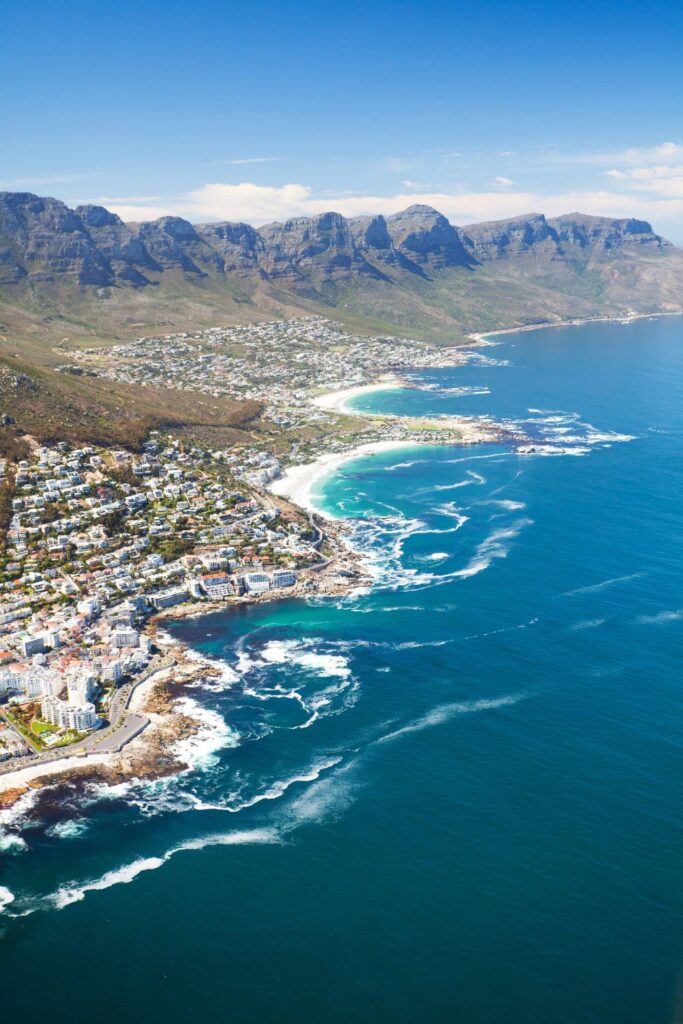
The tourist areas like V&A Waterfront, Camps Bay, Sea Point, Constantia wine region are well-maintained, heavily patrolled, and genuinely feel safe during the day.
Walking around these neighborhoods, you’d think you were in California or the Mediterranean.
The restaurants are world-class. The hotels are luxurious. The views are breathtaking.
And that’s exactly where the danger lies.
Because while you’re admiring Table Mountain or taking sunset photos at Camps Bay, you can easily forget that just a few miles away, there are neighborhoods where violent crime is a daily reality.
And the routes connecting these two worlds? They’re not always clearly marked or easy to avoid.
The short answer: Is Cape Town safe?
- ✅ Safe enough if you stick to tourist areas during the day
- ✅ Manageable if you follow strict safety protocols & use common sense
- ✅ Worth visiting for its incredible beauty and culture
- ⚠️ Dangerous if you let the scenery lull you into complacency
- ⚠️ High-risk in certain neighborhoods and routes
- ❌ NOT safe to wander aimlessly like you dont have a care in the world
I love Cape Town. I think everybody should experience it.
But I also think you need to know what you’re walking into and that includes understanding that “safe” is relative, and “beautiful” doesn’t mean “harmless.”
Travel Safety Guide for Women Who Want to Move Smart
I pulled together every safety tip, checklist, and real-world scenario I use when I travel. This guide keeps things clear and practical so you can plan with confidence.
This is an affiliate link which may earn a commission at no added cost to you.
Latest Tragedy in Cape Town
I’m updating this post today because something happened last week that proves everything I’ve been trying to tell y’all about Cape Town’s false sense of security.
On Friday evening, December 6, 2024, a 64-year-old grandmother named Karin van Aardt was murdered just hours after landing at Cape Town International Airport.
Karin and her husband Herman weren’t doing anything reckless. They had flown in that afternoon from Kruger Mpumalanga International Airport, rented a car, and were driving to Vredenburg to celebrate their granddaughter’s eighth birthday.
They were following their GPS, taking what seemed like a normal route toward the N7.
As they stopped at a traffic light at the intersection of Jakkalsvlei Avenue and Jakes Gerwel Drive in Bonteheuwel, a man smashed through Karin’s window, lunged into the vehicle, and stabbed her repeatedly while trying to steal her handbag.
Herman sped away and flagged down another driver who led them to Netcare N1 City Hospital.
Despite the medical team’s efforts, Karin died from her injuries.
A grandmother died on her way to a child’s birthday party.
Why This Matters for Every Tourist
Here’s what you need to understand: Karin and Herman were doing exactly what most people do. They:
- ✈️ Landed at Cape Town International Airport
- 🚗 Rented a car (standard for exploring Cape Town)
- 🗺️ Followed GPS directions toward the N7
- 🚦 Stopped at a traffic light in the late afternoon
They weren’t being careless. They weren’t out at 2 AM in a “bad neighborhood.” They were simply driving through Cape Town on a Friday evening.
This intersection sits on one of the most common routes people take from the airport.
Most rental car companies don’t warn you about it. Most travel blogs don’t mention it. Your GPS certainly doesn’t flag it as dangerous.
The route looked fine. The area looked normal. And that’s the problem.
Because Cape Town is beautiful, because the tourist zones feel so safe, because everyone says “just stick to the good areas and you’ll be fine” most people let their guard down.
They follow GPS without questioning it. They stop at red lights without thinking. They assume that if a route is popular, it must be safe.
That assumption can kill you.
After this attack, the UK government updated their travel advisory, specifically warning tourists to avoid certain routes near Cape Town International Airport and to stick to main highways like the M3 and N2.
Still thinking, “It’s Cape Town. I’ll be fine.”
What Cape Town’s Beauty Hides
Let me explain something that most travel blogs won’t tell you: Cape Town is two completely different cities.
There’s the Cape Town that tourists see, which includes the V&A Waterfront, Camps Bay, the wine country, and the Twelve Apostles.
This Cape Town is gorgeous, well-maintained, and relatively safe during the day.
Then there’s the Cape Town that locals live in which includes the Cape Flats, where gang violence kills people daily.
Where poverty, crime, and desperation create an environment most tourists will never see or understand.
The problem is that these two Cape Towns are separated by just a few miles. And the routes connecting the airport to the tourist zones?
They often cut right through the dangerous areas.
Karin van Aardt’s murder happened in Bonteheuwel, a Cape Flats neighborhood with ongoing gang activity and high crime rates.
But to regular travelers following GPS, Bonteheuwel is just a name on a map, another area to drive through on the way to somewhere beautiful.
That’s why I’m writing this update. That’s why I need you to understand that “Is Cape Town safe?” isn’t a simple yes or no question.
Cape Town is safe if you know which areas to avoid.
Cape Town is safe if you plan your routes carefully.
Cape Town is safe if you never, ever let the beauty make you forget where you are.
Unsafe Areas in Cape Town You Must Avoid
Let me be clear: there are parts of Cape Town where tourists should not go.
These areas face serious gang violence and daily shootings that have nothing to do with tourism but as an outsider, you can easily become collateral damage.
The Cape Flats: What You Need to Know
The Cape Flats is a massive area southeast of Cape Town’s city center.
It’s the result of apartheid-era forced removals, and the violence there today is real: active gang warfare, daily shootings, extremely high murder rates, and limited police control.
This isn’t about disrespecting residents because most are just trying to live their lives. But as a tourist, you have zero context for navigating these dangers safely.
Areas to Avoid Completely
- Nyanga – One of the most dangerous areas in South Africa; the UK government specifically warns against Borcherd’s Quarry Road leading here
- Bonteheuwel – Where Karin van Aardt was murdered on December 6, 2024; many tourists drive through unknowingly when following GPS from the airport
- Hanover Park – Notorious gang territory with frequent shootouts; not safe even during daylight
- Manenberg – Heavy gang presence with regular violent incidents
- Mitchells Plain – Large township with significant gang activity and violent robberies
- Khayelitsha – One of Cape Town’s largest townships; high crime rates; only visit with highly reputable tour operators
- Philippi – High crime area; not tourist-friendly
- Delft – Gang violence; some routes pass nearby
- Gugulethu – High crime; organized tours only with extreme caution
- Kraaifontein – Northern suburb with increasing crime rates
Routes That Lead to Danger
You can avoid these neighborhoods on a map and STILL drive through them if you follow GPS blindly.
Dangerous Routes From the Airport:
- ❌ The R300 – UK government warns against this
- ❌ Borcherd’s Quarry Road – Leads to Nyanga
- ❌ Routes through Bonteheuwel – Where Karin van Aardt was killed
- ❌ Shortcuts through Mitchells Plain
Safe Routes From the Airport:
- ✅ M3 Highway – Main road into city
- ✅ N2 Highway – Safe main route
- ✅ Airport Approach Road (Exit 16 on N2) – Recommended route
Before leaving the rental car lot, ask the agent to show you the safe route on a map.
Safest Neighborhoods in Cape Town for Tourists
Now let me tell you where you CAN relax (a little bit, at least). These neighborhoods are well-patrolled, cater to tourists, and have the infrastructure to keep you relatively safe during the day.
Top Safe Neighborhoods
1. V&A Waterfront The most tourist-friendly area in Cape Town. Heavy security, tons of shopping and restaurants, beautiful harbor views. You’ll see families walking around here at night. It’s as close to “safe” as Cape Town gets.
2. Camps Bay Upscale beachfront neighborhood with stunning views of the Twelve Apostles mountains. Safe for evening beach strolls, great restaurants, and one of the prettiest sunset spots in the world. Just don’t leave valuables visible in your parked car.
3. Sea Point Where I stayed during my visit. Family-friendly with a gorgeous promenade perfect for morning runs or sunset walks. Mix of locals and tourists, lots of Airbnbs, and genuinely comfortable to walk around during the day.
4. City Bowl Central and vibrant area at the base of Table Mountain. Well-patrolled, close to major attractions, and great for first-timers. Stick to main streets and be aware after dark.
5. Clifton Exclusive beach area with four beautiful beaches. Very safe, very quiet, very expensive. Perfect if your budget allows.
6. Green Point LGBTQ+ friendly neighborhood close to the waterfront and stadium. Trendy restaurants, safe streets, and easy access to everything.
7. Constantia Suburban wine country area with vineyards and upscale homes. Peaceful, secure, and perfect if you want a quieter, more residential feel. You’ll need a car, but it’s worth it for the wine farms.
8. Newlands Leafy suburb near Kirstenbosch Botanical Gardens. Safe, family-friendly, and gorgeous. More residential than touristy, but that’s part of the charm.
9. Kalk Bay Charming fishing village with colorful houses, great seafood, and an artsy vibe. Safe to explore on foot during the day. One of my favorite spots for authentic Cape Town culture without the danger.
10. Bloubergstrand Further out but incredibly safe. Famous for that postcard view of Table Mountain across the water. Great for kitesurfing and beach activities if you don’t mind the drive.
General Safety Rules (Even in “Safe” Areas)
Even in these neighborhoods, don’t get TOO comfortable:
- After dark, stay in well-lit, busy areas – Even Sea Point and Green Point aren’t safe for solo walking late at night
- Keep valuables hidden – Car break-ins happen even in Camps Bay and Clifton
- Don’t walk on beaches at night – Beautiful? Yes. Safe? Absolutely not.
- Use Uber instead of walking – It’s cheap, and it’s worth it
- Stay aware of your surroundings – Pickpockets work tourist areas too
The V&A Waterfront is the ONLY place I felt genuinely comfortable walking around after dinner. Everywhere else? I used Uber or stayed in my accommodation after dark.
Where I’d Stay If I Went Back
If I were booking Cape Town again, I’d choose Sea Point or Green Point for the neighborhood vibe, or the V&A Waterfront if I wanted maximum security and convenience.
Camps Bay is gorgeous but pricey, and Constantia is perfect if you’re doing the wine country thing.
Cape Town vs. Johannesburg: Which City Is Actually Safer?
Let me answer the question everyone asks: Neither city is “safe,” but the data shows Cape Town is actually MORE dangerous than Johannesburg for violent crime, despite what the media and your gut tell you.
I had the best time of my life in Johannesburg, and I actually prefer Johannesburg over Cape Town.
Jo’burg felt like i was with people and it was Black wealth everywhere, and I mean Blackity Black, while Cape Town felt racist and pretentious but that’s just my personal opinion.
The Numbers Don’t Lie
According to the most recent data available:
Murder Rates (2024):
- Cape Town: 70.2 murders per 100,000 people
- Johannesburg: 49.0 murders per 100,000 people
Cape Town’s murder rate is 43% higher than Johannesburg’s. Let that sink in.
Crime Index Scores (Numbeo 2024):
- Johannesburg: 80.74 (Very High)
- Cape Town: 72.98 (Very High)
Yes, Johannesburg’s overall crime index is slightly higher, but Cape Town’s VIOLENT crime is significantly worse.
Provincial Murder Rates (Per Capita):
According to South African government data:
- Western Cape (Cape Town): 15.3% per capita
- Gauteng (Johannesburg): 8.3% per capita
Cape Town’s province has nearly DOUBLE the per capita murder rate of Johannesburg’s province.
What the Data Actually Means
Here’s the breakdown of what tourists face in each city:

Here’s the problem: Cape Town’s murder rate increased from 51.0 in 2013 to 70.2 in 2024 (an increase of 37.6%), while Johannesburg saw a smaller increase.
Cape Town has gone in the opposite direction, with its murder rate jumping to 70.2 per 100,000 people even as other cities improved.
I love both cities for different reasons. But if you’re asking which one is safer? Statistically, Johannesburg is safer for violent crime.
However, Johannesburg FEELS more dangerous, which paradoxically makes it safer because you never let your guard down.
The data is clear: Cape Town has a significantly higher murder rate, more gang violence, and a false sense of security that gets tourists hurt.
If you go to Cape Town, treat it like you’re in one of the most violent cities in the world because you are.
Don’t let Table Mountain’s beauty make you forget that five South African cities made the global ranking of the world’s most violent places, with Cape Town leading the pack in murder rates.
How to Stay Safe in Cape Town
Forget generic advice. Here’s what actually keeps you safe in Cape Town, based on what locals do and what I learned firsthand.
Before You Arrive
Screenshot safe routes offline – Save the M3 and N2 highway routes from the airport to your hotel. When GPS tries to reroute through “faster” areas, ignore it.
Book airport pickup through your hotel – After Karin van Aardt’s murder between the airport and N7, professional drivers who know dangerous intersections are non-negotiable for arrival/departure days.
Join Cape Town safety Facebook groups – Search “Cape Town Expats” for real-time alerts about areas to avoid and recent incidents.
Driving Smart
Demand a route safety briefing at the rental counter – Make the agent show you which routes to never take. Most agencies have maps with danger zones highlighted.
Run red lights if threatened – If people approach your car at a light, proceed through carefully when safe. South African police understand this is a safety measure.
Keep R50-100 notes in your cup holder – Hand cash through a crack in the window without reaching for your wallet or opening doors.
Never stop for “accidents” or people in distress – It’s a carjacking setup. Drive to the nearest police station and report it.
Fill gas before half tank – Running out in the wrong area can be deadly.
Book Your Rental Car
If your trip requires more freedom than public transportation can give you, a rental car is the easiest way to stay flexible. Compare prices across agencies, check insurance options, and choose the pickup time that works for your schedule.
This tool pulls the best available rates so you’re not bouncing between sites trying to piece it together.
Compare Rental Car PricesMoney and Valuables
Use two wallets: the real wallet stays in the hotel safe. Carry a “mugging wallet” with R200-500, one expired card, and old gift cards. Hand it over without hesitation if robbed.
Only use ATMs inside malls during business hours – V&A Waterfront, Canal Walk, Gardens Centre. Never at night, never on the street.
Keep your phone in front pocket or inside bag – Never on restaurant tables. Phone snatching is extremely common.
After Dark
Establish a 5 PM rule – Know exactly where you’ll be until you return to your accommodation. No spontaneous exploring after dark.
Pre-book Ubers while inside – Don’t stand outside waiting. Book it, watch the map, step outside only when it’s 2 minutes away.
Share your live location with someone back home – Use WhatsApp or Google Maps so someone always knows where you are.
If Something Goes Wrong
Comply immediately with zero resistance – Hand over your belongings instantly. Your life is worth infinitely more than your stuff.
Memorize emergency numbers – 10111 (police), 112 (mobile), U.S. Embassy +27 11 290-3000. Write them down as backup.
Know the nearest safe place – Before going anywhere, locate the closest police station, hospital, mall, or hotel within 2 minutes.
Trust your gut over politeness – If someone makes you uncomfortable, LEAVE. Don’t worry about being rude.
Tours in Cape Town
During my visit to Cape Town, I discovered that using well-known tour companies like Viator greatly improved my experience.
By booking through Viatour, I booked a wine tasting in the nearby Stellenbosch region, shark cage diving off the coast, and a Safari.
The professional guides provided valuable insights into local history, culture, and wildlife, enriching my understanding of this diverse South African destination.
I appreciated that these reputable companies maintained high safety standards and offered reliable transportation, allowing me to fully immerse myself in the beauty of Cape Town without worrying about tickets, how to get there, lunch, etc.
All of that is taken care by the tour company.
Is Cape Town Safe for Black People?
Cape Town is predominantly white in ways that will shock you if you’re coming from diverse American cities.
And let me tell you: the racism isn’t subtle.
Walking through Camps Bay, dining at upscale restaurants, exploring the Waterfront, I felt a level of discomfort I had never experienced in my life.
The stares. The clipped interactions. The way conversations would stop when I walked by. The subtle (and not-so-subtle) ways you’re made to feel like you don’t belong.
It genuinely felt like Alabama in the 1960s, just with better scenery.
What It Actually Feels Like
The stares – Constant, unrelenting, especially in places like Camps Bay and Constantia. Not curious glances—the kind of stares that make you hyperaware of your skin color at every moment.
The service – Noticeably different treatment in upscale restaurants and shops. White tourists got warm greetings and attentive service.
I got coldness, suspicion, and the bare minimum. At one wine farm, I watched the staff fawn over white tourists while barely acknowledging me until I had to ask for service multiple times.
The assumptions – Being followed in stores. Security guards watching me more closely. Hotel staff assuming I couldn’t afford to be there.
The exhausting experience of constantly having to prove you belong in spaces you paid good money to access.
The discomfort in “white spaces” – Beaches, wine country, upscale neighborhoods—these areas feel aggressively unwelcoming. You’re tolerated, not welcomed.
There’s a palpable tension that makes it impossible to fully relax.
Safest Hotels in Cape Town: Where to Stay for Maximum Security
When it comes to luxury hotels in Cape Town, you want both world-class service AND top-notch security. Here are the five best options where safety meets sophistication:
1. One&Only Cape Town
Located in the heart of the V&A Waterfront on a private island, One&Only offers resort-style luxury with exceptional security.
The property is gated with 24-hour surveillance, and its location in the Waterfront means you’re in one of Cape Town’s safest areas. The spa is world-class, the rooms are stunning, and you can walk to restaurants and shops without leaving the secured Waterfront complex.
Why it’s safe: Private island location, gated entry, V&A Waterfront security, 24-hour concierge

2. Belmond Mount Nelson Hotel
The iconic “Pink Lady” of Cape Town has been welcoming guests since 1899. Set on nine acres of manicured gardens in the City Bowl, this historic property feels like a Victorian estate.
With 24-hour security, controlled access, and a location in one of Cape Town’s safest neighborhoods, you can relax by the heated pools or enjoy afternoon tea without worry.
Why it’s safe: Gated property, 24-hour security, prestigious location, controlled access

3. Cape Grace (Fairmont Managed Hotel)
Situated on a private quay at the V&A Waterfront, Cape Grace reopened in 2024 with a stunning Fairmont renovation.
The location is unbeatable right on the marina with Table Mountain views, inside the secured Waterfront complex. The personalized service is exceptional, and the Bascule Bar’s whisky collection is legendary.
Why it’s safe: Private quay location, V&A Waterfront security perimeter, direct harbor access, 24-hour staff

4. The Twelve Apostles Hotel and Spa
Perched dramatically between the Twelve Apostles mountain range and the Atlantic Ocean, this property is isolated from the city’s crime concerns.
The hotel provides complimentary shuttles to Camps Bay and the V&A Waterfront, so you never have to drive through risky areas. The award-winning spa and ocean views make it worth the distance from downtown.
Why it’s safe: Remote coastal location, private shuttle service, gated property, far from high-crime areas

5. The Silo Hotel
Housed in a converted grain silo at the V&A Waterfront, The Silo is Cape Town’s most exclusive boutique hotel.
With just 28 rooms, each featuring floor-to-ceiling windows and contemporary African art, this property offers intimate luxury with maximum security. The rooftop pool has 360-degree views, and you’re steps from the Zeitz MOCAA museum.
Why it’s safe: V&A Waterfront location, boutique size allows personalized security, controlled elevator access, 24-hour concierge

DO YOU NEED TRAVEL INSURANCE?
Most people have questions about where to go for medical care in an emergency. First, I should note that if you’re on spring break, chances are slim that you’ll need emergency care.
Still, better safe than sorry!
I can’t say this enough, but please get insurance when traveling to South Africa! Even if you only go on a short trip, you should always travel with insurance.
Protect Your Trip With Travel Insurance
Before you book your flights and hotels, make sure your trip is covered. Travel insurance can help with medical emergencies, delays, cancellations, and lost luggage. I use it on every international trip because things can shift fast and I’d rather not gamble with my wallet.
Check Travel Insurance OptionsFAQs About Safety in Cape Town
A: Cape Town can be safe for American tourists if you follow strict safety protocols and stay hyper-aware of your surroundings. The tourist areas—V&A Waterfront, Camps Bay, Sea Point, and the wine regions—are relatively safe during the day with heavy security and police presence.
A: No, Cape Town is NOT safe at night, even in tourist areas. Once the sun sets, stay in your hotel or only go out with trusted guides or organized tours. Do not walk anywhere alone after dark—not even in “safe” neighborhoods like Sea Point or Gardens. Do not use public transportation after dark.
A: Avoid the Cape Flats entirely—this includes Bonteheuwel (where Karin van Aardt was killed), Nyanga, Hanover Park, Mitchells Plain, Khayelitsha, Philippi, Delft, and Manenberg. These areas have daily gang violence, high murder rates, and frequent carjackings. The problem for tourists is that GPS often routes you THROUGH these areas when traveling from the airport to tourist zones.
A: Renting a car in Cape Town is common but comes with serious risks if you don’t know what you’re doing. If you rent a car: (1) Research your route before you drive—never blindly follow GPS, (2) Keep doors locked and windows up at ALL times, (3) Don’t stop at red lights in unfamiliar areas if you sense danger, (4) Never leave valuables visible in the car, (5) Avoid driving after dark, (6) Stick to main highways (M3, N2) rather than “shortcuts,” (7) Fill up gas in safe areas before your tank gets low.
A: No, Cape Town is not statistically safer than Johannesburg. Cape Town scores 72.98 on Numbeo’s crime index while Johannesburg scores 80.74—both are “very high” crime cities. The difference is perception, not reality. Johannesburg has a reputation that keeps tourists alert. Cape Town’s beauty makes tourists comfortable, which is actually more dangerous because people drop their guard.
👉🏾 Don’t forget to grab the Travel Safety Guide. Trust me, you’ll feel so much better having a plan.
✨ Travel smart, not scared.
Conclusion: Is it Safe to Travel to Cape Town, South Africa
Yes, I went. Yes, I had some incredible experiences. Table Mountain at sunset? Unreal. The wine country? Gorgeous.
The food? Some of the best I’ve had anywhere in the world. I understand why people fall in love with this city.
Cape Town is not safe in the way you’re probably hoping it is.
The danger isn’t theoretical. It’s not something that only happens to people who “weren’t being careful.” Karin van Aardt was just following GPS from the airport.
She wasn’t being reckless. She was being a normal tourist.
The biggest threat in Cape Town isn’t the crime itself but the false sense of security the beauty creates.
You see those stunning beaches and mountain views, and your brain starts telling you everything’s fine.
That’s when you make mistakes.
And if you’re a Black traveler like me? There’s another layer you need to prepare for.
I felt more uncomfortable in Cape Town’s white spaces than anywhere else I’ve traveled. The stares. The cold service.
The subtle (and not-so-subtle) ways you’re made to feel like you don’t belong. It genuinely reminded me of what my parents described about traveling through the Deep South in the 1960s.
As a Black tourist, you’re tolerated in the white spaces but not welcomed.
That emotional exhaustion, constantly proving you belong, dealing with microaggressions, and feeling hypervisible.
It’s real. And it’s draining.
Should You Still Go?
Yes, but don’t go expecting it to be like your trip to Turkey or your vacation in Phuket.
This isn’t that kind of destination. Cape Town demands that you show up prepared, alert, and unwilling to let the scenery distract you.
Go if you can commit to:
- Hiring drivers for airport transfers instead of renting a car immediately
- Never follow GPS blindly: Research every route before you drive it
- Staying in your accommodation by 5 PM or having a solid plan for where you’ll be
- Keeping your guard up even when the views are breathtaking
- Preparing yourself mentally for racial tension if you’re a Black traveler
- Following every safety protocol even when it feels excessive
My Bottom Line for You
Cape Town is beautiful. Cape Town is worth experiencing. But Cape Town is also dangerous, racially tense, and demands constant vigilance.
Can you visit safely? Yes. Will you be able to fully relax? Probably not. Is it worth it despite all of that? That depends on you.
For me, I’m glad I went. I saw things I’ll never forget. But I also dealt with things I shouldn’t have had to deal with on vacation.
The next time I plan a trip, I’ll probably choose somewhere that doesn’t require quite so much emotional and mental armor.
💡 Need help getting travel-ready?
👉 Grab my Comprehensive Travel Safety Guide eBook – It’s just $19.99 and will change how you travel
👉 Shop my Amazon Safety Must-Haves – From TSA-approved locks to discreet travel pouches
👉 Get Trusted Travel Insurance – Because peace of mind is priceless
☕️ Enjoyed this post? Buy me a coffee to support more content like this!
I would love to hear your thoughts on whether it is safe to travel to Cape Town and how you feel about the South Africa travel warning, so leave me a comment on Facebook, Twitter, or Instagram.
ARE YOU ALSO ON PINTEREST?
Why not save this post to your Pinterest board for later? I am also on Pinterest so feel free to follow Passports and Grubboards and get the latest pin directly.






5 Comments